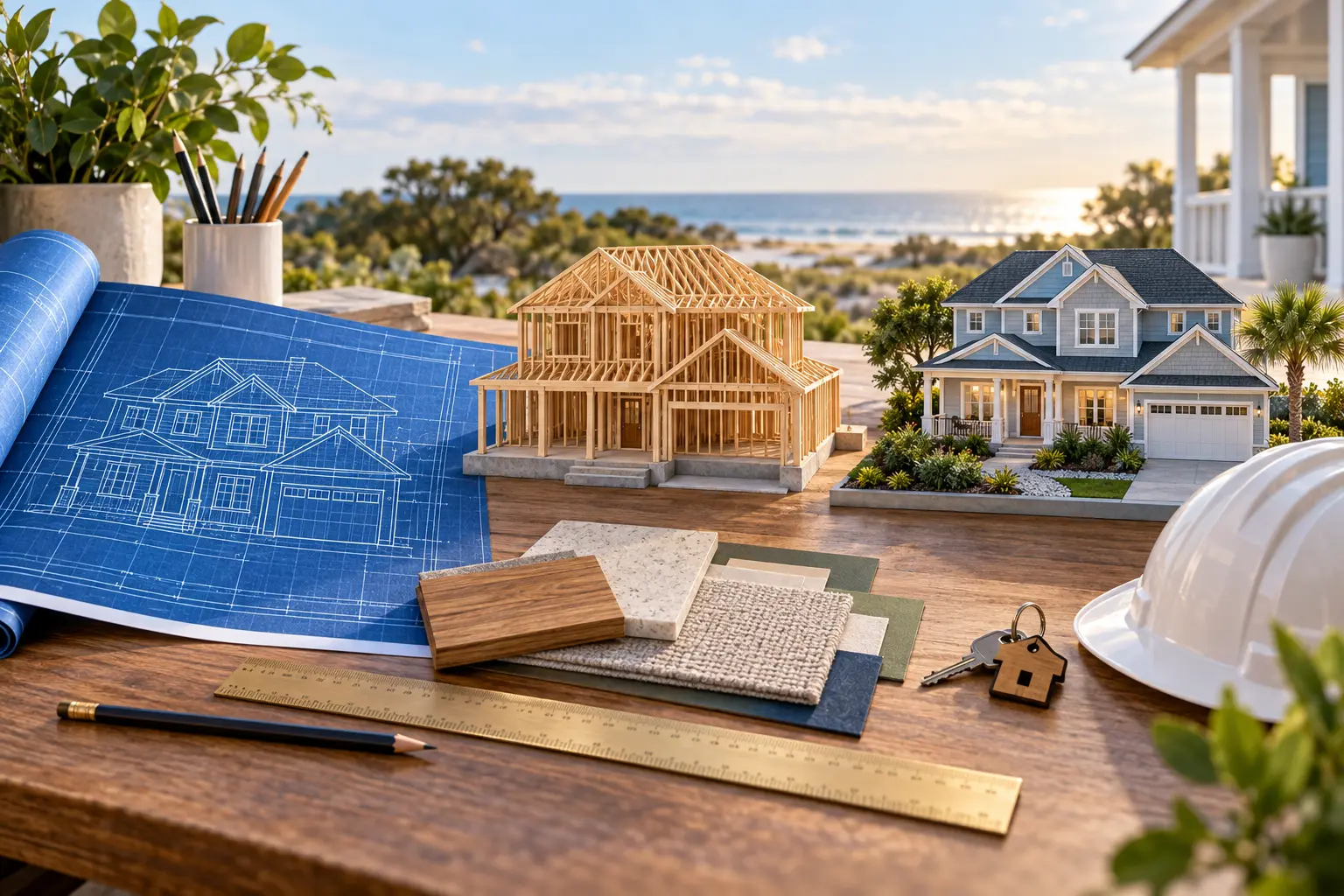
You are buying from a builder in a planned community. If the home will be complete before closing, eligible conventional, FHA or VA purchase financing may be considered. Builder timelines, deposits, incentives and completion requirements still matter.
A construction-to-permanent loan may combine the building phase with long-term financing, or the project may use separate construction and permanent loans. Builder approval, plans, budget, appraisal and draw administration are part of the review.
Existing lot ownership, current liens, land value, site work and the construction budget can affect how the transaction is structured. The complete title and financing picture must be reviewed.
A renovation loan is different from financing a new home from the ground up. Eligible improvements may be included through a structured repair budget and draw process.
Availability and structure depend on the lender, loan program, borrower, builder and project.
Single-closing construction-to-permanent
Construction and permanent financing are arranged together.
One set of closing documents may cover both phases. Construction funds are managed during the build, and the loan converts to permanent financing after eligible completion requirements are met.
Two-closing construction-to-permanent
Construction financing comes first.
The initial loan funds the build. A separate closing provides the permanent mortgage after completion. Updated qualification, costs and market conditions may affect the second transaction.
Standard finished-home purchase
The builder completes the home before your mortgage closes.
Eligible conventional, FHA or VA financing may be considered for a completed production-builder home. This is not the same as financing construction draws yourself.
The project timeline
Seven checkpoints from dirt to doorstep.
01Land and builder
Review ownership, site, builder and project eligibility.
02Plans and contract
Gather specifications, budget, allowances and construction agreement.
03Loan and appraisal
Review the borrower and the proposed home under program rules.
04Closing
Sign the approved construction and financing documents.
05Draws and inspections
Funds may be released as eligible work is completed and reviewed.
06Final completion
Confirm the home, required documents and final work meet the program.
07Permanent mortgage
Convert or close into long-term financing under the selected structure.
What belongs in the plans?
The loan needs more than a floor plan.
These pieces help the lender understand what is being built, who is building it and how the project will be completed.
Construction contract
Scope, total cost, timing and responsibilities.
Plans and specifications
The details used to describe the proposed home.
Builder review
Licensing, experience, insurance and other lender requirements may apply.
Budget and allowances
Site work, materials, selections and items not included in base pricing.
As-completed appraisal
An opinion of value based on the plans, specifications and required appraisal analysis.
Draw schedule
How eligible construction funds may be released as work progresses.
Protect the plan
Small changes can create big financing questions.
Change orders
Upgrades and design changes can increase the contract price and cash needs.
Cost overruns
Know who covers costs above the approved construction budget.
Delays
Permits, materials, weather and labor can affect completion and financing timelines.
Rate-lock timing
Options, extensions and costs vary. Review the complete structure rather than assuming the builder’s timeline will hold.
Builder quote reviewAn incentive can be valuable. It should still be compared with the complete loan.Review My Builder Quote →
Look past one headline
Compare what the offer really changes.
Builder credit and how it may be used
Loan structure and complete closing costs
Rate-lock choices and possible extension costs
Required deposits and refund conditions
Upgrade costs and items excluded from base price
Communication and service through construction
For Realtor and builder partners
Good communication is part of the construction plan.
I help partners understand the buyer’s financing path, important deadlines and the questions that can affect the transaction.
Before the contractReview financing, cash needs and builder-lender choices.
During the buildKeep expectations clear as timing, selections and documents change.
Before completionPrepare for appraisal updates, final documents and closing requirements.
Through closingGive the buyer and partners clear updates on what comes next.
Potential advantages
Why buyers explore new construction.
Financing can be planned around a new home
Some structures combine construction and permanent financing
Early planning can reduce last-minute surprises
Important tradeoffs
What deserves a closer look.
Timelines and rate decisions can be complex
Changes and upgrades may affect cash needs
Builder incentives should be compared with the full loan cost
Construction questions
Answers before the plans become commitments.
Must I use the builder’s lender?+
Not always. Review the contract and compare the full options.
When should I speak with a lender?+
Early, ideally before signing or committing to major upgrades.
Can a rate be locked for a long build?+
Options depend on the lender, program and expected completion date.
What is an as-completed appraisal?+
It is an appraisal based on the proposed home, plans, specifications and applicable appraisal requirements. Completion must later be confirmed as required.
What happens when the price changes during construction?+
Change orders or overruns may affect available funds, the loan structure or cash needed. Discuss changes before agreeing to them.
Is a builder incentive always the best deal?+
Not necessarily. Compare the incentive with the complete loan, closing costs, lock terms and long-term plan.
Government program notice
First Coast Mortgage Funding LLC is not affiliated with the Department of Veterans Affairs (VA), the U.S. Department of Housing and Urban Development (HUD), or the Federal Housing Administration (FHA). This is not a government offer, nor has it been approved or endorsed by any government agency. Program eligibility and underwriting requirements vary by applicant and by lender. Loan approval is subject to applicable agency guidelines, investor requirements, and First Coast Mortgage Funding LLC’s credit policies.
Before you sign the builder contract
Let’s build the financing plan around the real project.
Bring the quote, plans or questions you have. We’ll identify what deserves attention next.